What Is a White-Label Training Platform and Do You Need One?
A white-label training platform lets cleaning businesses deliver branded, compliance-ready training under their own name. Here is what it means, how it works, and whether it makes sense for your business.
If you have ever looked into staff training software, you have probably seen the phrase “white-label platform” come up. It sounds technical, but the concept is straightforward. This article explains what it means in the context of cleaning businesses, what you get from a white-label training platform, and how to decide whether your business needs one.
Key Takeaways
- A white-label training platform puts your company name and logo on professionally built courses — your staff see your brand, not the provider’s.
- It issues certificates automatically and stores training records, giving you the audit-ready documentation commercial clients and NHS trusts require.
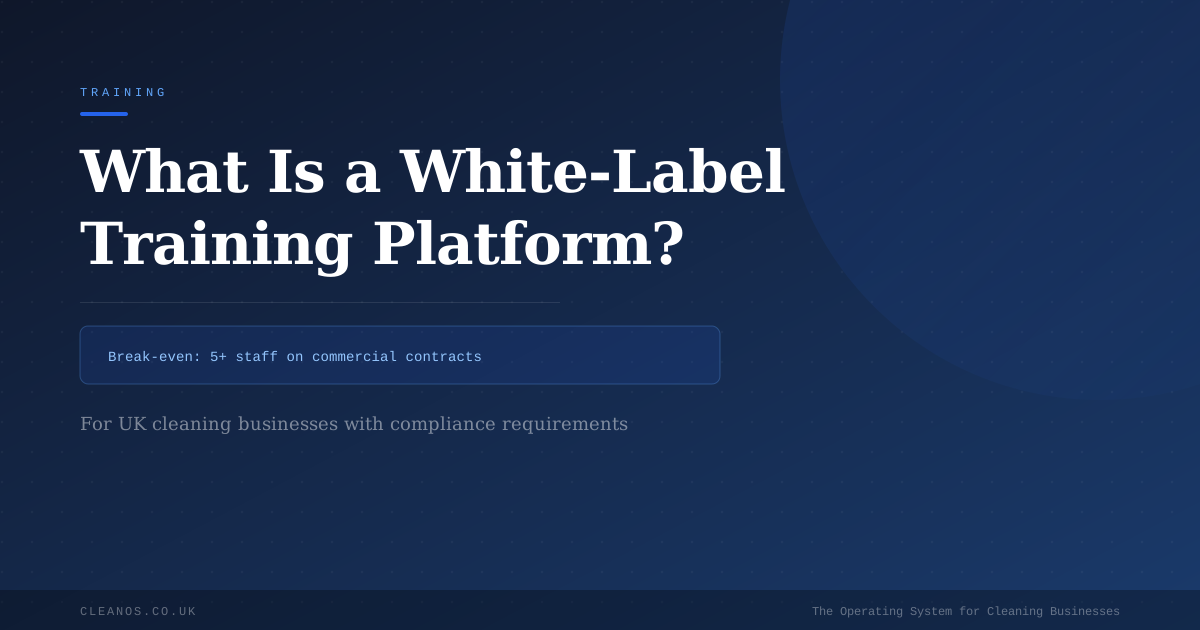
- The break-even point is typically when you have five or more staff on commercial contracts and clients start asking for training evidence.
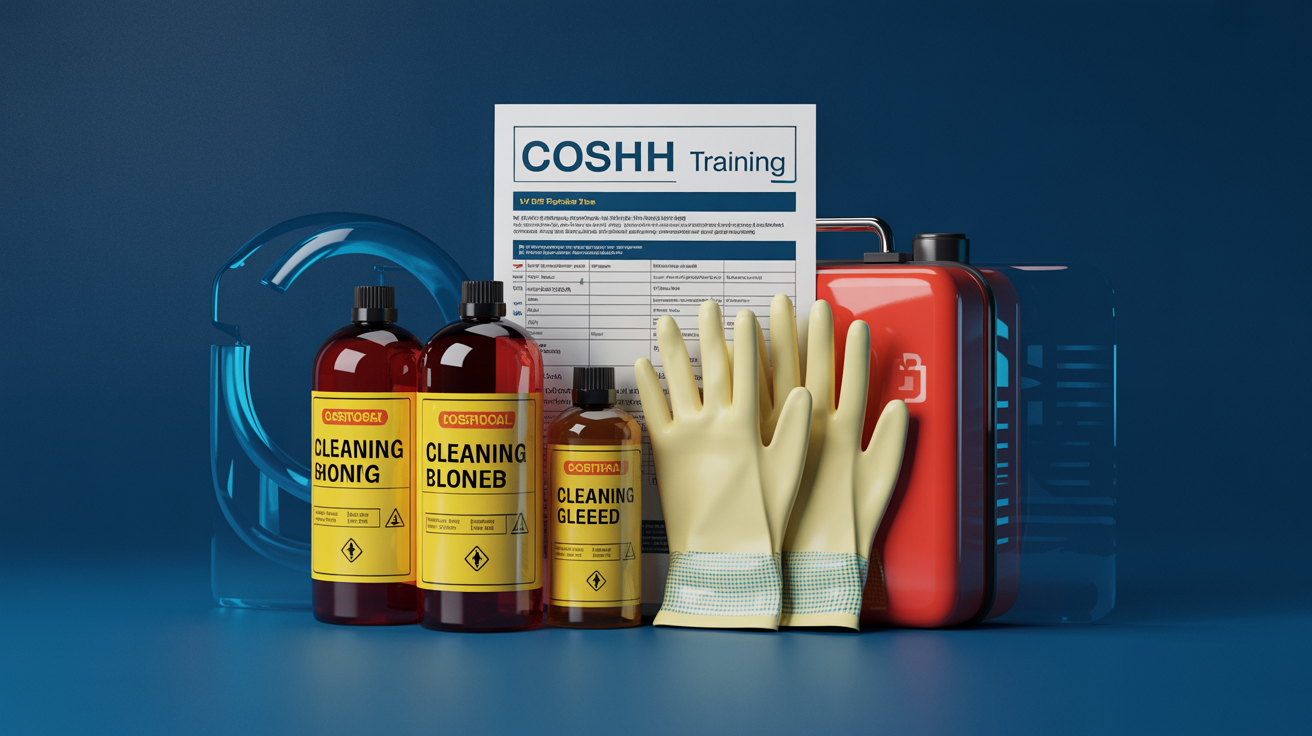
- The platform needs to cover UK-specific legislation: COSHH 2002, PPE Regulations 2022, Manual Handling Regulations 1992, and RIDDOR 2013 — generic or US-based content will not hold up to scrutiny.
What white-label means
A white-label product is built by one company and sold to another, who then presents it under their own brand. The end user — in this case your staff — sees only your company name and logo. They have no idea who built the underlying platform.
In the training world, this means you can give your staff access to a professional, fully structured learning system that looks like it was built specifically for your cleaning company. The certificates say your company name. The login page shows your logo. The learning materials reflect your standards.
You do not build anything from scratch. The content, quiz system, certificate generation, and record-keeping are already done. You put your name on it.
What a white-label training platform includes
A solid platform for cleaning businesses covers:
Branded front end. Your company name, logo, and colours on every page staff see, including the login screen, course pages, and completion certificates.
Pre-built course content. Ready-to-deliver training modules covering what your staff need: induction and professional conduct, health and safety, COSHH, manual handling, RIDDOR, cleaning techniques, and more. You are not starting from zero.
Automatic certificates. When a staff member completes a course, a certificate is generated and issued automatically. It shows their name, your company name, the course title, and the completion date.
Training records. A dashboard showing which staff have completed which courses, when, and what certificates have been issued. This is the evidence trail you need for client audits, pre-qualification questionnaires, and insurance purposes.
Mobile access. Staff complete training on their phones, between shifts or at home. No laptops or desktop computers required.
Generic provider vs white-label platform: what you actually get
| Feature | Generic training provider | White-label platform |
|---|---|---|
| Brand on certificates | Provider’s name and logo | Your company name and logo |
| PQQ evidence quality | Weak — no company name on certificate | Strong — named certificate, audit-ready |
| Compliance alignment | Variable; may not cover UK legislation | Aligned to COSHH 2002, PPE 2022, RIDDOR 2013 |
| Record keeping | Manual or none | Automatic dashboard — all completions logged |
| Mobile access | Desktop-first, variable | Built for smartphones, usable between shifts |
| Time to first course | Days to weeks | 48 hours from sign-up to staff completing courses |
Why cleaning businesses use white-label training
It looks professional to clients
When a facilities manager or local authority contracts officer asks whether your staff are trained and certified, you can point them to a structured programme under your own brand. That is a very different proposition from handing them a stack of photocopied handouts or saying “we run inductions ourselves.”
Commercial clients, NHS trusts, schools, and local authorities increasingly ask for training evidence as part of pre-qualification questionnaires. A white-label platform gives you documentation that holds up to scrutiny.
It protects you legally
If an incident happens on a site and the question becomes whether your staff were adequately trained, you need proof — not a vague claim that someone was shown the ropes during their first week. Actual records, with dates, course content, and certificates.
The Health and Safety at Work Act 1974 requires you to provide adequate training for the risks your employees face. A platform that stores those records automatically means you are never scrambling to find evidence when a client or HSE inspector asks.
It makes scaling easier
When your cleaning business grows from five staff to twenty-five, you cannot afford to train each new person individually every time. A platform that runs the training automatically, issues the certificates, and logs the records lets you onboard new staff without adding hours to your own schedule.
This is particularly important when you win a large contract and need to bring multiple people on quickly. You send them a login, assign the relevant courses, and track completion from a dashboard rather than arranging face-to-face inductions at scale. For more on managing rapid onboarding, see how to onboard multiple cleaners without drowning in paperwork.
It gives you a point of difference
Most small and mid-sized cleaning companies do not have a formal training programme. They train informally, if at all. Offering documented, certificated training under your own brand name is something you can put in your marketing, your proposals, and your contract renewals.
Some clients will pay more for a contractor who can demonstrate this level of professionalism. Others will shortlist you ahead of competitors who cannot.
Do you actually need one?
Not every cleaning business needs a white-label training platform immediately. Here is how to think about it.
You probably need it if:
- You have five or more cleaning staff and are growing
- You work on commercial contracts, particularly with public sector clients
- You have been asked for training records during a client audit or tender process
- You are spending time running ad hoc inductions every time someone new joins
- You want to differentiate your business when pitching for contracts
You can probably wait if:
- You are a sole trader with no staff
- All your work is residential and clients have not raised training questions
- You are still in the first few months of business and have a very small team
The point at which white-label training starts paying for itself is typically when you have more than four or five staff and clients are starting to ask about compliance. The time saved on inductions alone tends to justify the cost, before you factor in contract wins or audit outcomes.
What to look for in a platform
Course content quality. The training needs to be accurate, UK-specific, and aligned with current legislation: COSHH 2002, PPE Regulations 2022, Manual Handling Regulations 1992, and RIDDOR 2013. Generic or US-focused content will not pass scrutiny in a UK compliance audit.
Certificate format. The certificate needs to look professional and include: staff name, course title, completion date, and your company name. Some clients also want a unique reference number.
Record access. You need to pull up training records quickly when a client asks. A dashboard that shows which staff have completed which courses, filtered by site or contract, is what you are looking for.
Mobile usability. Most cleaning staff do not use computers regularly. If the platform only works well on a desktop, your completion rates will suffer.
Ongoing content updates. Regulations change. The platform should update course content when relevant legislation changes, so you are not delivering out-of-date training.
Setup time. Some platforms take weeks to configure. If you need to be up and running quickly, check how long it actually takes from signing up to having staff completing courses.
The bottom line
A white-label training platform is not a luxury for large cleaning companies. It is infrastructure that makes your business more professional, more defensible, and easier to grow. Once you are at the stage where training new starters and maintaining records is taking real time — or where client contracts require documented evidence of staff training — the case for one becomes clear.
The question is not really whether your business will need one. It is when.
Not sure what training certificates your team should hold? That guide covers every certificate from legal baseline to commercial differentiator.
CleanOS Training delivers white-label training for UK cleaning businesses. Seven courses covering induction, health and safety, core skills, residential, commercial, specialist cleaning, and team management. Certificates issued automatically, records kept for you. Book a free demo to see how it works.
Ready to get your team trained?
Set up compliant, branded training for your cleaning staff in 48 hours. No trainer needed.
Book a Free Demo