How to Onboard 10+ New Cleaners Without Drowning in Paperwork
Onboarding multiple cleaning staff at once is a compliance minefield. This guide walks you through the legal requirements, a repeatable onboarding system, and how digital training removes the bottleneck.
The Problem With Growing Fast
Winning a new contract is great. Needing to hire eight cleaners in two weeks to service it is where things start to break down.
Most cleaning businesses manage one or two hires reasonably well. The manager sits down with the new starter, runs through the basics, hands over a contract, and signs them off. When you need to onboard ten people simultaneously, that approach collapses. There are only so many hours in the day, and training availability becomes the single biggest bottleneck between your contract start date and having a compliant, capable team on site.
The paperwork compounds the problem. Each new hire triggers a specific set of legal obligations, most of which carry real consequences if you miss them. Training records that do not exist cannot be produced in an audit. Contracts not issued within the statutory window create employment law exposure. H&S inductions that never happened leave you unprotected if a new starter has an accident in week one.
This guide gives you a practical, repeatable system for onboarding cleaning staff at scale, whether you are bringing on five people or fifty.
What the Law Requires at the Point of Hire
Before you think about schedules, uniforms, or site routes, you have non-negotiable legal obligations to meet. These apply to every new starter, regardless of whether they are full-time, part-time, or zero-hours.
Right to Work Checks
You must check that every employee has the legal right to work in the UK before they start. For British and Irish citizens, this means checking their passport or birth certificate alongside proof of National Insurance. For those with biometric residence permits, you check the Home Office online service. You must retain a copy of the documents you check and the date you checked them.
Getting this wrong carries civil penalties of up to £20,000 per illegal worker if the Home Office finds you did not conduct a proper check. Conducting the check correctly gives you a statutory excuse.
Written Statement of Terms
Under the Employment Rights Act 1996, as amended by the Employment Act 2002 and strengthened by the Good Work Plan legislation in 2020, you must provide every employee and worker with a written statement of their main terms of employment from day one of employment. This is not optional and there is no grace period.
The statement must include: the names of the employer and employee, the start date, job title and description, pay and how it is calculated, working hours, holiday entitlement, notice periods, sick pay, and details of any pension scheme. For zero-hours workers, it must also confirm the basis on which work will be offered.
Failure to provide this does not give the employee a standalone right to compensation, but it can be raised before an Employment Tribunal in the context of other claims and will weaken your position significantly.
H&S Induction and Training Obligations
Under the Health and Safety at Work Act 1974, you have a general duty to ensure, so far as is reasonably practicable, the health, safety, and welfare of your employees. The Management of Health and Safety at Work Regulations 1999 go further, requiring you to provide employees with comprehensible and relevant information on the risks to their health and safety, and to provide adequate health and safety training on recruitment and when their work changes.
For cleaning staff specifically, this means:
- A site induction before they start work on any client premises
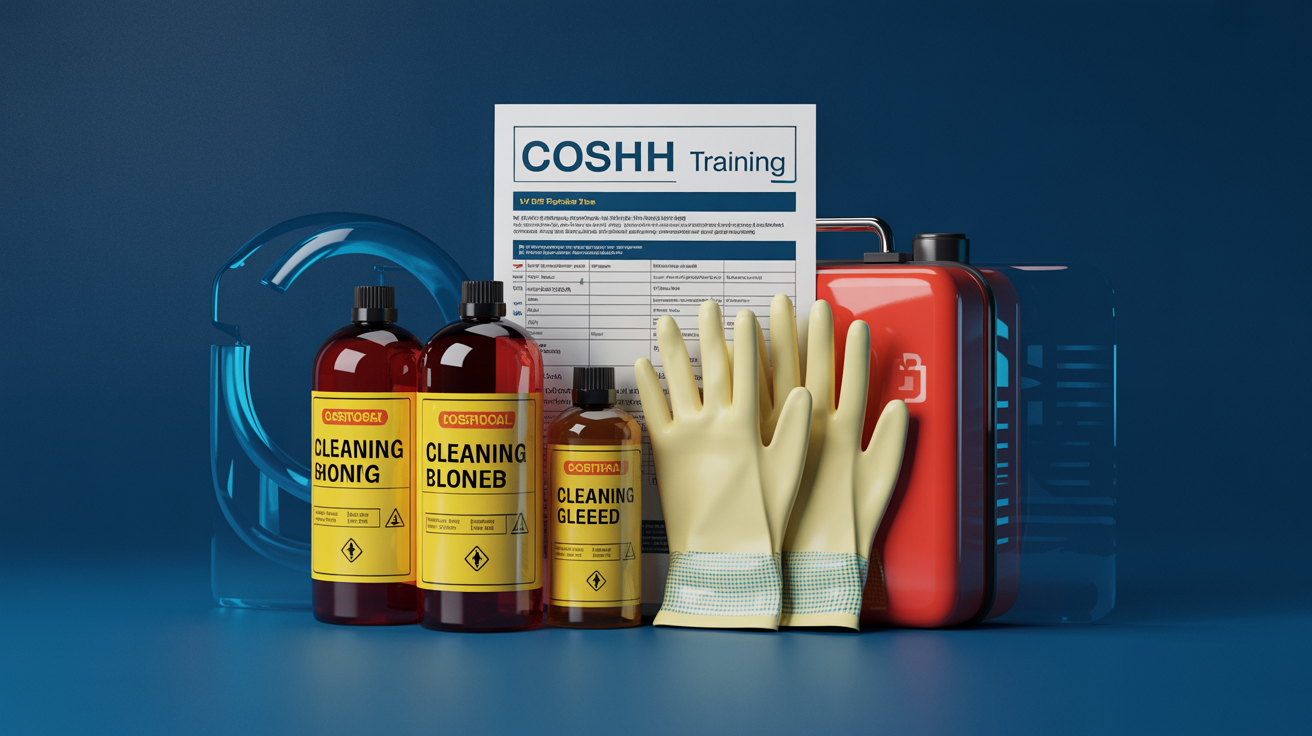
- COSHH training covering every chemical they will use
- Manual handling training (manual handling injuries are among the most common in the cleaning sector)
- PPE training covering correct fitting, use, and disposal
- Slips and trips awareness (given the environments cleaners work in)
The word “adequate” is defined by the courts, not by you. If an employee is injured and you cannot demonstrate that training was provided and understood, the fact that you intended to train them later will not protect you.
What Must Be Issued to Every New Starter
By the end of their first day, every new cleaner should have received or acknowledged receipt of:
- Written statement of employment particulars
- Employee handbook (or summary of key policies)
- H&S policy statement
- COSHH information relevant to their role
- PPE issued with a signed issuance record
- Emergency contact and reporting procedure information
By the end of their first week:
- Site-specific induction for every site they will work on
- Training records signed to confirm completion
- Uniform and equipment allocation signed off
Why Manual Onboarding Creates Compliance Gaps
When you handle onboarding manually, the failure points are structural, not personal. Your managers are not negligent. The process itself makes gaps inevitable.
Training delivery depends on trainer availability. If your ops manager is running a new contract start and your supervisor is covering a sick absence, the new starters in the third location simply do not get trained that week. The intention was there. The delivery was not. Your training records now show a gap you cannot explain away.
Records exist in multiple places. One manager keeps a spreadsheet. Another uses a paper folder. A third has nothing, because they were told training was the manager’s job. When an HSE inspector asks to see training records for a specific employee, you spend forty minutes looking and still cannot produce a complete picture.
COSHH information is not always consistent. If five managers are briefing new starters on chemical safety from memory, five slightly different versions of the information are being conveyed. That is not an acceptable approach under COSHH 2002, which requires that information be accurate and up to date.
Site-specific inductions are skipped. A new cleaner gets a general briefing but starts on a new site they have never been inducted to. If they have an accident, your argument that they received “general induction” is unlikely to satisfy the HSE or an employment tribunal.
Training matrices are not maintained. In a small business, the ops manager knows roughly who has been trained in what. In a growing business with multiple sites and a rotating workforce, that knowledge does not scale. When training expires, nobody knows. When new guidance comes in that requires refresher training, nobody tracks who has been updated.
Building a Repeatable Onboarding System
The antidote to manual onboarding is a documented system that does not depend on any one person’s time or memory. A good onboarding system has four components.
1. A Pre-Start Checklist (Before Day One)
Before the new starter arrives, the following should already be done:
- Right to Work check completed and documents copied
- Written statement of terms prepared and ready to sign
- Employee number allocated
- Payroll set up (or request submitted to payroll provider)
- Uniform and PPE allocated
- Site access arranged (key, fob, code, or escort process confirmed)
- Induction schedule confirmed with dates, times, and trainer names
If you are onboarding ten people and this list is not complete before they walk through the door, you are already behind.
2. A Structured Day One
Day one should be consistent for every new starter regardless of which manager is running it. That means a written script or checklist that any competent manager can follow. It covers:
- Welcome and introductions
- Company overview and values (brief, five minutes maximum)
- Right to Work documents confirmed and copied
- Written statement of terms signed
- Employee handbook issued and key policies explained
- H&S policy explained
- PPE issued and fitting confirmed
- Emergency procedures explained
- Q&A
At the end of day one, both the manager and the new starter should sign a record confirming what was covered.
3. Week One: Site Inductions and Core Training
Every site a new cleaner will work on requires a site-specific induction. This is not optional. The induction should cover:
- Site layout and emergency exits
- Specific H&S risks on that site
- Client-specific requirements or restrictions
- Colour-coded equipment protocol
- Key contact at the client site
- What to do if there is a problem
Core training modules that should be completed and signed off in week one:
- COSHH (product-specific, not generic)
- Manual handling
- Slips, trips, and falls
- Correct PPE use
- Reporting procedures (accidents, near misses, complaints)
4. Probationary Reviews at Four and Twelve Weeks
A four-week review is not a performance management exercise. It is a structured check-in to confirm:
- All required training has been completed
- The employee understands their duties and the company’s standards
- Any concerns or issues are identified early
- Training gaps are recorded and scheduled for completion
The twelve-week review is more comprehensive. It should cover performance against the standards set at induction, confirm that all training records are up to date, and form the basis for any decision about passing or extending the probationary period.
Both reviews must be documented. A signed review form protects you if the employment relationship later becomes contentious.
The Role of Digital Training
The single biggest operational bottleneck in onboarding at scale is trainer availability. Your ops manager cannot be in five places at once. If training delivery requires a person to deliver it, your onboarding throughput is capped by that person’s calendar.
Digital training removes that bottleneck entirely.
When your core training modules are online, a new cleaner can complete them on their phone before they arrive on site, during their first morning, or during a scheduled slot in their first week. The training is consistent every time. The record is created automatically. The manager does not need to be present.
Ready to get your team trained and compliant? Book a free demo of CleanOS Training and see how you can onboard staff in 48 hours.
This matters most when you are onboarding multiple people simultaneously. Ten new starters can complete their COSHH training, manual handling module, and H&S induction in the same week without any manager having to deliver the same content ten times. The time saving alone is substantial. The compliance benefit, complete and consistent training records for every new starter, is what protects you.
Site-Specific vs. Generic Training: Why You Need Both
A common mistake is assuming that because a new cleaner has done their COSHH training, they are ready to work on any site. They are not.
Generic training covers the principles: what COSHH is, why it matters, how to read a safety data sheet, what PPE to wear for different chemical types. That training applies everywhere.
Site-specific training covers the particulars: which chemicals are used on this site, where they are stored, what the client’s specific requirements are, what the emergency procedure is for this building, where the eye wash station is.
Both are required. Generic training without site induction leaves the new starter unable to navigate the specific risks of the site they are working on. Site induction without generic training leaves them without the foundational knowledge to work safely with chemicals or equipment.
For a business operating across multiple sites, this means you need:
- A bank of generic training modules that every new starter completes once
- A site induction record for each site they are authorised to work on
- A system that tracks both and shows which site a given employee is cleared to work on
Building and Maintaining a Training Matrix
A training matrix is a simple tool: rows are employees, columns are training modules, cells show completion dates and expiry dates. When a cell is empty, training has not been completed. When a cell shows a date that has passed, training has expired.
The power of a training matrix is not the matrix itself. It is what it forces you to do: name every training requirement, assign it to every relevant employee, and track its status.
For a cleaning business, a basic training matrix would include columns for:
| Training Module | Required For | Validity |
|---|---|---|
| COSHH awareness | All staff | Annual review |
| Manual handling | All staff | Refresher when needed |
| Slips/trips/falls | All staff | On induction |
| PPE use | All staff | On induction |
| Site induction — [Site Name] | Site-specific | On each new site |
| Fire safety and evacuation | All staff | Annual |
| Infection control | Healthcare/specialist sites | Annual |
| Lone working procedure | Any lone worker | On induction |
Without this matrix, you cannot answer a basic question: is every cleaner on this contract fully trained? With it, the answer is visible in seconds.
Onboarding Across Multiple Sites Simultaneously
When a contract win requires you to staff multiple sites at once, the coordination challenge multiplies. You may be running inductions at three different locations in the same week while also processing right to work checks, issuing contracts, and setting up payroll for fifteen people.
A few principles that make this manageable:
Centralise the paperwork. Right to Work checks, contracts, and handbook sign-offs do not need to happen on site. Bring new starters into your office or a central location for their administrative onboarding before they go to site. This takes two hours per person and means you process the compliance administration efficiently.
Use digital training for the generic modules. Send new starters a link to their training modules before their start date. By the time they arrive on site, their COSHH, manual handling, and H&S induction modules should already be complete. What remains on day one is the site-specific induction, which does need to happen in person on the relevant site.
Appoint a site lead for each location. This person is responsible for running the site induction, signing the induction record, and being the first point of contact for the new starters on that site. They do not need to be a manager; they need to be competent and briefed.
Keep all records in one system. Whether a new starter was inducted in Bristol or Birmingham, their training record should be accessible from a single platform. Paper folders in site offices make audits and compliance checks very difficult to manage across a multi-site operation.
Common Onboarding Mistakes at Scale
Issuing contracts late. The day one requirement under the Employment Rights Act 1996 catches many growing businesses off guard. If you are preparing contracts the week after someone starts, you are already non-compliant.
Relying on verbal briefings as training records. “I told them on the first day” is not a training record. If you cannot show a signed record of what was covered and when, it did not happen in any legally meaningful sense.
Training everyone to the same level regardless of role. A new cleaner working on a standard office contract needs different training from one assigned to a specialist clinical site. Your onboarding system needs to reflect that.
Skipping the four-week review. Early probationary reviews are where you catch problems before they become expensive. Missing them also means you may hit the twelve-week mark with training gaps that have been sitting unaddressed for weeks.
Not updating the training matrix when guidance changes. When HSE or COSHH guidance is updated, existing staff may need refresher training. If you have no training matrix, you have no way to identify who needs to be retrained and who is already current.
Step-by-Step Onboarding Checklist
Before Day One
- Right to Work documents checked and copied
- Written statement of terms prepared
- Payroll set up
- Uniform and PPE allocated
- Site access arranged
- Digital training modules assigned (if using online platform)
- Induction schedule confirmed
Day One
- Welcome and company overview (5 minutes)
- Right to Work documents confirmed
- Written statement of terms signed
- Employee handbook issued and signed
- H&S policy explained and signed
- PPE issued, fitting confirmed, issuance record signed
- Emergency procedures explained
- Day one sign-off form completed by manager and employee
Week One
- Core training modules completed: COSHH, manual handling, slips/trips, PPE use
- Site-specific induction completed for each allocated site
- Site induction records signed for each location
- Training matrix updated
- First-week check-in with line manager
Month One
- Four-week probationary review completed and documented
- Any training gaps identified and scheduled
- Payroll confirmed correct
- Any concerns or issues addressed formally
The Cost of Getting It Wrong
Employment law claims from poorly onboarded staff are not common, but they are not rare either. An employee who is dismissed in their first three months can still bring a discrimination claim if they believe the real reason for dismissal relates to a protected characteristic. If your records from that period are incomplete, your defence is substantially weakened.
HSE improvement notices and prohibition notices arising from inadequate training are avoidable. If an inspector visits a site following a near-miss or complaint and finds that the cleaners on site cannot demonstrate they were trained in the chemicals they are using, you face enforcement action regardless of your intentions.
Staff turnover is partly a training and onboarding issue. Cleaners who feel they were not properly prepared for the job they were asked to do, not shown how things work, and not given the tools to succeed in the first month, leave. The cost of replacing a cleaning operative, including recruitment, right to work checks, training time, and the period of reduced productivity while the new person finds their feet, is real even if it is rarely calculated.
A good onboarding system is not expensive to build. The cost of not having one shows up in claims, fines, failed audits, and staff you keep having to replace.
Want a system that tracks training, sends reminders when certifications expire, and gives every new starter a consistent induction? Book a free demo of CleanOS Training and see how the platform handles onboarding from day one.
Ready to get your team trained?
Set up compliant, branded training for your cleaning staff in 48 hours. No trainer needed.
Book a Free Demo